Pipe Leak Repair in Lincoln Square, Manhattan
When pressurized water supply lines begin weeping behind apartment walls or a sudden burst pipe threatens multi-floor water damage, immediate mechanical stabilization is critical. Our plumbing technicians isolate damaged sections, repair micro-fissures and pinhole corrosion in copper lines, and replace deteriorating threaded galvanized piping across pre-war co-ops and contemporary high-rise residences in Lincoln Square.
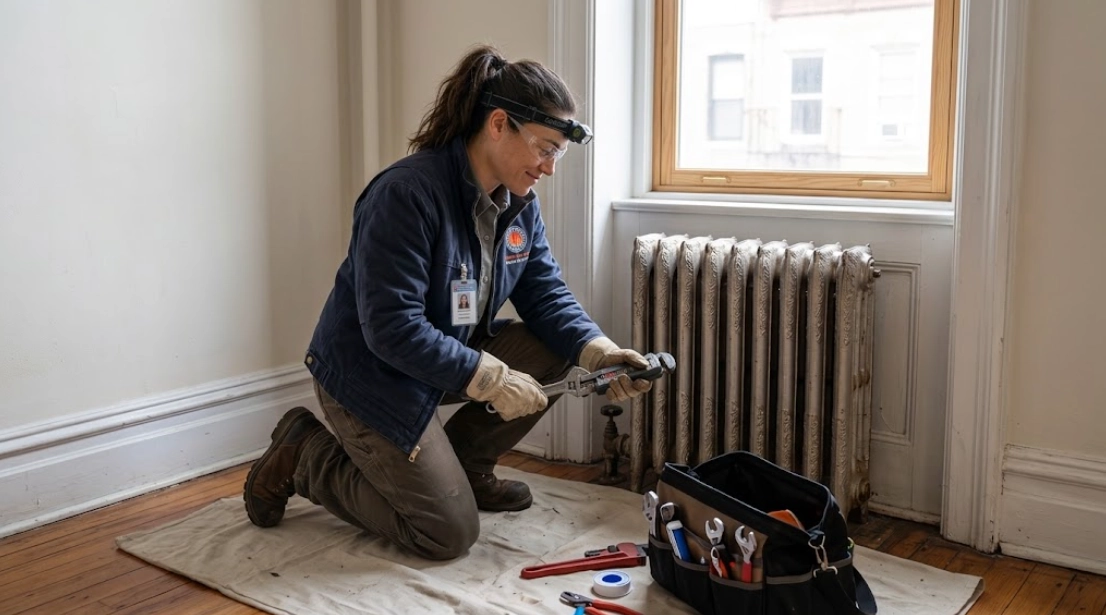
Understanding Pipe Failures in Manhattan Multi-Family Buildings
In Lincoln Square residences, water supply lines endure continuous hydrostatic pressure, temperature swings, and chemical interactions. Properties surrounding Columbus Avenue and Broadway feature a wide spectrum of piping materials. Older pre-war cooperatives often retain original threaded brass or aging galvanized iron branch lines, while post-war and newly renovated luxury buildings rely on rigid copper tubing or modern engineered polymers.
Over decades, water chemistry and microscopic turbulence wear away internal protective coatings on copper tubing, causing localized pitting corrosion. This leads to tiny spray jets known as pinhole leak repair Lincoln Square Manhattan calls. Because these leaks spray pressurized water continuously inside enclosed mechanical drywall chases, they often saturate insulation, plaster, and subflooring for weeks before surfacing through floor seams or baseboards.
Addressing a leaking pipe in wall repair Lincoln Square Manhattan scenario requires meticulous care. In high-rise co-ops and condominiums, isolating water often requires coordinating with building staff to shut down a vertical riser serving multiple residential tiers. Once isolated, the line must be cut cleanly, prepped, and joined with commercial-grade fittings that comply with the strict New York City Plumbing Code.
Common Pipe Leak Symptoms
- Sudden dampness, staining, or peeling paint along common bathroom walls.
- A persistent ticking, hissing, or dripping sound inside wall chases.
- Verdigris (crusty green or white mineral deposits) on visible copper joints.
- Brown, rust-tinted water emerging from hot or cold faucets.
- Sudden drop in fixture water volume when other taps are opened.
- Water staining on lower-level apartment ceilings directly under plumbing stacks.
Types of Pipe Repairs We Perform
From emergency burst isolation to permanent mechanical solder joints, we restore domestic water lines safely.
Copper Pinhole & Joint Soldering
Copper tubing commonly fails at elbows, tees, or along the bottom of horizontal runs where sediment settles. We excise the corroded tube section and install heavy-gauge Type L copper replacement pipe joined with high-strength solder or modern cold-press copper fittings rated for high-rise pressure.
Galvanized Iron & Brass Replacements
Pre-war galvanized pipes rust from the inside out, creating brittle threads and pinhole seams. We unscrew or cut out corroded iron sections, install dielectric unions to prevent electrochemical reaction, and transition securely to rigid copper branch lines.
Burst Pipe & Emergency Freeze Isolation
During extreme winter cold spells, pipes near perimeter walls or uninsulated exterior risers can freeze and split. We execute immediate mechanical valve isolation, thaw frozen lines safely without open flame hazards, and replace split pipe segments.
Step-by-Step Pipe Leak Repair Procedure
How our technicians systematically resolve concealed piping failures in Lincoln Square apartments.
Pinpoint Localization & Source Confirmation
Before any wall surface is opened, we verify the exact location of the leak using acoustic listening sensors and moisture meters, confirming whether the failure originates on a domestic hot line, cold branch, or heating riser.
Pressure Isolation & System Drainage
We shut down the appropriate apartment shutoff or coordinate with building management to isolate the vertical riser. Downstream taps are opened to relieve residual water pressure and drain the line completely, preventing accidental water spill.
Surgical Access & Pipe Inspection
A neat, minimal access opening is cut through drywall or plaster directly at the identified failure point. We evaluate the pipe exterior for wall thinning, mineral crusting, or mechanical stress fractures to ensure the surrounding pipe is structurally sound.
Permanent Pipe Replacement & Joining
The defective section is cut away using precision pipe cutters. We deburr the tubing, clean contact surfaces, and install replacement copper piping using lead-free solder or code-approved press-connect fittings to establish a permanent, leak-proof seal.
Pressure Testing & Verification
Water pressure is restored slowly to bleed trapped air from the lines. The new joint is monitored under full operating pressure, followed by thermal imaging verification to guarantee complete watertight integrity before closing the space.
When to Repair a Pipe vs. When to Repipe
Deciding whether to perform a localized patch or pursue a broader piping replacement depends on the overall condition of your plumbing system:
When Spot Repair Makes Sense: Localized repairs are ideal when a single physical failure occurs on an otherwise healthy pipe—such as a nail puncture from shelving installation, a worn valve packing nut, or a single isolated solder defect on relatively new copper tubing.
When to Consider Comprehensive Repiping: If an inspection reveals widespread wall thinning, multiple pinholes along a single line, or heavy interior rust restricting water flow through pre-war galvanized lines, repeated spot repairs become costly and risky. In these scenarios, transitioning to our comprehensive repiping services in Lincoln Square protects your home against recurring leaks.
If your leak stems from a primary water heating cylinder or boiler loop rather than branch piping, explore our specialized water heater repair and boiler repair options.
Factors Influencing Repair Complexity
- Accessibility: Pipes behind decorative stone tiles or custom cabinets require careful access planning.
- Building Shutoff Rules: Multi-tenant riser shutdowns must follow co-op building management protocols.
- Material Condition: Brittle brass or corroded galvanized lines require specialized transition couplings.
- Pipe Diameter: Main building lines and risers require larger commercial-grade fittings than apartment branch lines.
Pipe Leak Repair FAQs
Practical answers to frequent questions about residential pipe leaks in Lincoln Square.
Schedule Pipe Leak Repair in Lincoln Square
Call our dispatch team to discuss your leak symptoms and arrange an on-site mechanical evaluation.
Need diagnostic source confirmation first? Visit our leak detection homepage or view our Manhattan service areas.