Boiler Repair in Lincoln Square, Manhattan
When freezing winter temperatures arrive along the Upper West Side and your heating boiler fails to fire, prompt mechanical troubleshooting is essential. Our heating specialists diagnose low-pressure steam boilers and closed-loop hydronic heating systems, resolving burner lockouts, faulty low-water cutoffs, leaking relief valves, and circulator pump failures across Lincoln Square townhomes, brownstones, and boutique multi-family properties.
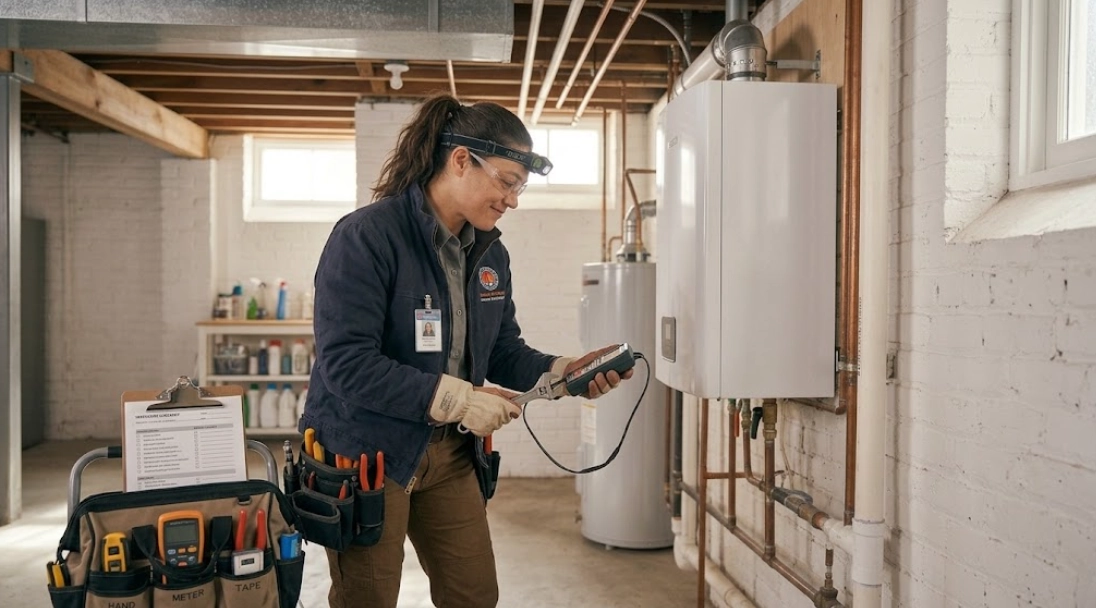
Steam vs. Hydronic Heating in Lincoln Square Buildings
Heating systems in Lincoln Square reflect the neighborhood’s diverse architectural history. Classic pre-war properties built in the early 20th century typically rely on low-pressure steam heating systems that distribute vapor through vertical risers to massive cast-iron radiators. In contrast, mid-century buildings, brownstones, and modern residential developments frequently utilize closed-loop hydronic (hot water) heating networks that circulate water through copper baseboards or underfloor radiant zones.
When a resident encounters a no heat boiler repair Lincoln Square Manhattan call, understanding whether the equipment is a steam or hot water system dictates the entire diagnostic approach. In a steam boiler repair Lincoln Square Manhattan scenario, failures often involve float-chamber sediment jamming the low-water cutoff (LWCO), an uncalibrated pressuretrol switch causing high-limit shutoffs, or water level sight glass leaks.
For a hot water boiler repair Lincoln Square Manhattan call, issues commonly involve air-bound heating loops, seized multi-speed circulator pumps, failing bladder expansion tanks, or electronic zone valve actuator motors. When a gas boiler repair Lincoln Square Manhattan experiences flame failure, our technicians inspect electronic ignition modules, flame rectification rods, and draft hood spill switches to ensure combustion safety.
Common Boiler Warning Signs
- Burner clicks repeatedly without firing or shuts down on safety lockout.
- Radiators remain ice cold despite the thermostat calling for heat.
- Water leaking from the pressure relief valve discharge pipe.
- Water level constantly dropping or rising violently in the sight glass tube.
- Loud banging, clanking, or whistling sounds echoing through heating pipes.
- Boiler short-cycling on and off every three to five minutes.
Key Boiler Assemblies We Diagnose & Repair
We restore precision calibration and safety protection across all core heating components.
Low-Water Cutoffs & Auto-Feeders
The low-water cutoff is the vital primary safety control protecting cast-iron boiler sections from dry-firing and cracking. We blow down sediment chambers, test electronic probe sensors, and calibrate automatic water feeders.
Gas Burners & Ignition Modules
We clean gas burner orifices, inspect spark igniters, test pilot flame sensors, and verify gas manifold pressure using calibrated digital manometers to ensure clean, efficient combustion.
Circulator Pumps & Zone Controls
In hydronic systems, failing pump impellers or burned-out motor cartridges halt hot water distribution. We replace circulator pumps, bleed air from hydronic loops, and service multi-zone relay boards.
Step-by-Step Boiler Diagnostic & Repair Procedure
How our technicians systematically diagnose and resolve heating equipment failures.
Safety Survey & Operating Parameters
We check the mechanical room for proper combustion air, inspect emergency switch positions, verify water pressure on the tridicator gauge (12-15 psi for closed hydronic; 0.5-2 psi for steam), and test sight glass water levels.
Thermostat & Low-Voltage Control Tracing
We trace the 24V electrical call for heat through the room thermostat, high-limit aquastat, pressuretrol, and low-water cutoff to isolate open safety switches or faulty transformer circuits.
Combustion & Draft Evaluation
Our technician inspects burner ignition, checks flame color and stability, tests safety roll-out switches, and verifies natural draft into the chimney flue to ensure combustion gases vent outdoors safely.
Component Replacement & Calibration
Defective controls—such as leaking pressure relief valves, seized pumps, or burned-out ignition modules—are replaced with OEM-spec components. Operating controls are precisely calibrated to manufacturer specifications.
Heat Distribution Verification
We fire the boiler through complete heating cycles, checking that steam or hot water reaches upper-level radiation uniformly, verifying quiet piping operation, and checking all joints for leaks.
When to Repair vs. When to Replace a Heating Boiler
Evaluating boiler age and mechanical integrity helps building owners make sound heating investments:
When Repair Makes Sense: When a cast-iron boiler heat exchanger is physically sound and the equipment is under 15 to 20 years old, replacing peripheral controls—such as a circulator pump, gas valve, pressuretrol, or low-water cutoff—is a cost-effective, dependable solution that restores reliable heating.
When to Consider Replacement: If the cast-iron boiler sections have cracked and are leaking boiler water directly into the combustion chamber, or if the unit is over 25 years old and experiencing severe fuel inefficiency and chronic failures, replacing the boiler with modern high-efficiency equipment under NYC DOB permits provides lasting comfort and lower fuel bills.
If your heating issue also impacts domestic hot water, visit our water heater repair page. For hidden pipe leaks feeding heating lines, explore our leak detection homepage and pipe leak repair services.
Factors Influencing Repair Complexity
- Basement Accessibility: Tight pre-war boiler rooms require careful equipment clearance.
- System Cleanliness: Black iron oxide sludge in hydronic loops requires system flushing.
- Chimney Flue Condition: Venting draft must comply strictly with NYC mechanical codes.
- Piping Pitch: Steam system hammer often requires correcting radiator branch pitch.
Boiler Repair Inquiries in Lincoln Square
Clear answers to common residential heating and boiler questions.
Schedule Boiler Diagnostics in Lincoln Square
Call our heating dispatch line to describe your boiler symptoms and arrange an on-site mechanical inspection.
Serving Lincoln Square, Upper West Side, Hell's Kitchen, and Midtown Manhattan.